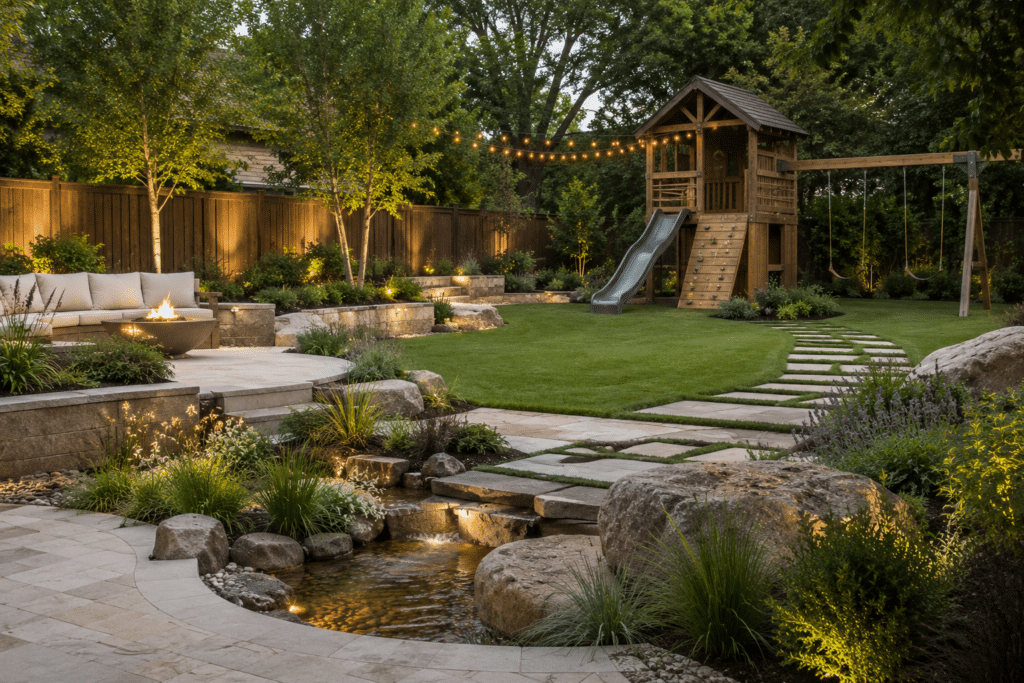
Designing a backyard that truly engages children goes far beyond installing a swing set or copying traditional playgrounds. Today, more homeowners are turning toward natural playground ideas that blend seamlessly into the landscape while encouraging creativity, exploration, and development. A thoughtfully designed natural backyard playground uses natural elements, natural materials, and intentional layout choices to transform your own backyard into a dynamic, enriching environment.
For contractors and homeowners alike, this approach offers a great way to create long-term value while supporting imaginative play, physical activity, and meaningful time outdoors. Let’s explore how to design natural play areas that feel like an extension of the natural world, while also being functional, safe, and visually appealing.
Why Choose a Natural Playground?
Unlike traditional playgrounds or conventional playgrounds filled with plastic and metal, nature play spaces emphasize unstructured play and interaction with the natural environment. These natural play spaces are intentionally designed to help children develop fine motor skills, problem-solving skills, and social skills all while having fun.
For today’s children, who spend more time indoors than ever before, a natural play environment reconnects them with the outdoors. It’s not just about play, it’s about building a deeper relationship with the natural landscape.
Homeowners are increasingly looking for creative ways to upgrade their outdoor space with features that are both functional and aesthetically pleasing.
Key Elements of a Natural Playscape
A well-designed natural playscape incorporates a variety of natural features that encourage exploration and creativity. Here are some foundational elements to consider:
1. Incorporating Natural Materials
Using natural materials such as wood, stone, and sand creates a more organic and inviting environment. Think tree stumps, large rocks, and even a hollow log for climbing, balancing, or imaginative adventures.
Ground coverings like wood chips or pine needles provide a soft surface that reduces the risk of injury while maintaining a natural look. These materials are also a great option for long-term durability.
You can also repurpose items like old tires, old pots, or finds from thrift stores to add character and functionality. These loose parts are essential for open-ended play, allowing kids to build their own worlds.
2. Designing Engaging Play Structures
While avoiding overly manufactured play equipment, you can still incorporate play structures that feel natural. A simple rope ladder, rustic balance beams, or even a small climbing wall made from wood can provide hours of fun.
A tire swing hung from mature trees is a timeless feature that blends beautifully into the environment. These structures are especially appealing to older kids and older children, who benefit from more challenging physical activities.
Unlike man-made equipment, these features evolve with the child, making them a great addition for families planning for the long term.
3. Water Features and Sensory Play
Adding water features introduces a whole new level of engagement. Whether it’s a simple water table, a small stream, or a pump system for water play, these features are a favorite among young children and younger children alike.
Pair water elements with a sensory garden filled with tall grasses, fragrant plants, and textured surfaces to create immersive sensory play opportunities. A sensory bin or designated digging area can further enhance tactile exploration.
A sand pit or sand box is another must-have, offering endless possibilities for building, digging, and collaborative play.
4. Creating an Obstacle Course
An obstacle course is one of the best ways to promote physical activity and coordination. Use tree stumps, logs, and stones to create a path that encourages jumping, climbing, and balancing.
This type of setup supports open-ended play and allows kids to let their imagination run. You can even incorporate a treasure hunt element to keep things fresh and exciting.
For kids of all ages, an obstacle course is a great way to combine fun with skill-building.
5. Mud Kitchens and Creative Zones
A mud kitchen is a staple in nature playgrounds. Built using reclaimed building materials, it gives children a space to experiment, create, and engage in messy play.
Add shelves, containers, and even old pots to encourage role-playing and creativity. These setups are perfect for fostering social skills and collaboration.
Planning Your Outdoor Play Space
When designing outdoor play spaces, it’s important to think about layout, safety, and integration with the surrounding landscape.
Safety Considerations
While natural designs are inherently softer, it’s still important to inspect for hazards like sharp edges or unstable structures. Use a chain link fence or natural barriers to define the outdoor play area if needed.
Ensure that all materials are child-safe and that surfaces provide adequate cushioning. A mix of wood chips, sand, and grass can create a balanced and safe environment.
Zoning the Space
Divide your outdoor space into different zones to support various types of play:
- Active zones with play structures and obstacle elements
- Quiet zones for reading or relaxing
- Creative zones with a mud kitchen or sensory bin
- Exploration zones with plants and natural features
This approach ensures that the space works for both younger children and older children, making it adaptable as your family grows.
Working with the Landscape
Leverage existing features like slopes, trees, and natural shade. Landscape architects often emphasize working with the land rather than against it, which is key in creating authentic nature play areas.
Incorporating mature trees, uneven terrain, and natural pathways enhances the experience and reduces the need for extensive construction.
Natural Playground Ideas to Inspire Your Project
If you’re looking for fun ideas to bring your natural playground ideas backyard vision to life, here are some options:
- Build a rope ladder leading to a small platform
- Create a sand pit bordered with logs
- Install a tire swing under a shaded tree
- Use large rocks for climbing and seating
- Add a water table for interactive play
- Design a sensory garden with herbs and grasses
- Set up a rotating treasure hunt area
- Construct a mini climbing wall using reclaimed wood
Each of these elements contributes to a cohesive natural playscape that encourages free play and discovery.
Benefits Beyond Play
A well-designed natural backyard playground offers more than just entertainment. It supports child development in meaningful ways:
- Encourages open-ended play and creativity
- Builds problem-solving skills through exploration
- Enhances fine motor skills with hands-on activities
- Promotes social skills through group play
- Supports physical health through active movement
Organizations like the national wildlife federation advocate for nature-inspired playgrounds as a critical part of childhood development. These environments help children connect with the natural world in a way that structured play simply cannot.
A Smart Investment for Homeowners
From a contractor’s perspective, offering natural playground equipment and design services is a great option for clients looking to upgrade their back yard.
These projects:
- Increase property appeal
- Blend seamlessly with landscaping
- Require fewer synthetic materials
- Offer long-term usability
Unlike a new playground filled with plastic components, a natural design grows with the family and adapts over time.
How a Contractor Can Help You Build the Perfect Natural Playground
While many natural playground ideas can start as DIY projects, partnering with a contractor ensures your natural backyard playground is safe, durable, and thoughtfully designed. A professional can take your vision and turn it into a cohesive natural playscape that blends seamlessly into your outdoor space.
Smart Design That Works with Your Yard
A contractor knows how to work with your existing natural environment instead of forcing a layout like many traditional playgrounds. By incorporating slopes, drainage, and the surrounding landscape, they can design natural play areas that feel like a true extension of your home.
They also help strategically place key features like play structures, water features, and open zones to support both function and flow. The result is a balanced space that encourages imaginative play while still looking polished and intentional.
Safety and Long-Term Durability
Safety is one of the biggest advantages of hiring a professional. Contractors ensure all elements, from balance beams and rope ladder features to a small climbing wall, are properly installed and secure.
They also help eliminate risks like sharp edges or unstable materials while choosing the right building materials for longevity. Ground coverings like wood chips create a soft surface that supports active play and reduces injury risk, making the space suitable for kids of all ages.
Custom Features That Grow with Your Family
A contractor can build custom elements that go beyond basic DIY setups. Features like a built-in mud kitchen, a natural-edged sand pit, or a professionally installed tire swing anchored to mature trees add both function and visual appeal.
They can also design an engaging obstacle course using tree stumps, large rocks, and other natural materials. These elements support open-ended play and adapt as children grow making your investment worthwhile for the long term.
Creative Use of Natural Materials
One of the biggest benefits of working with a contractor is their ability to use natural elements in a way that feels intentional and cohesive. From placing large rocks for climbing to incorporating tree stumps or even a hollow log, they create dynamic nature play spaces that inspire exploration.
They can also incorporate reclaimed items like old tires or sourced materials to add character while keeping the design eco-friendly.
A Finished Space That Adds Value
Beyond functionality, a contractor ensures your natural play space looks complete. Instead of feeling like a collection of random features, your backyard becomes a unified, well-designed natural play environment.
For homeowners, this is a great option that not only enhances everyday living but also adds long-term value to your own backyard. With the right approach, your space becomes a place where kids can explore, create, and connect with the natural world right at home.
Ready to Create a Natural Playground in Your Backyard?
Creating a natural playground in your own backyard is one of the best things you can do for your family. By incorporating natural elements, natural materials, and thoughtful design, you can build a space that supports imaginative play, learning, and connection to the outdoors.
Whether you’re a contractor looking to expand your services or a homeowner ready to transform your outdoor space, these natural playground ideas provide a roadmap for creating something truly special.
With the right approach, your backyard can become more than just an open space—it can become a thriving, engaging, and inspiring natural play environment for years to come.
